The first plant I ever brought into this apartment was a fiddle-leaf fig I carried up three flights of stairs in November, and by January it had dropped every leaf onto the floor in a dramatic little circle around its pot. Olive found this hilarious. I did not. It was my introduction to what north-facing windows actually mean: steady, gentle light all day, and not one minute of direct sun.
It's early April now, the light is getting longer, and I'm finally doing my spring plant check. Two and a half years in, this is what I've learned about keeping things alive in a dim living room.
What north light actually gives you
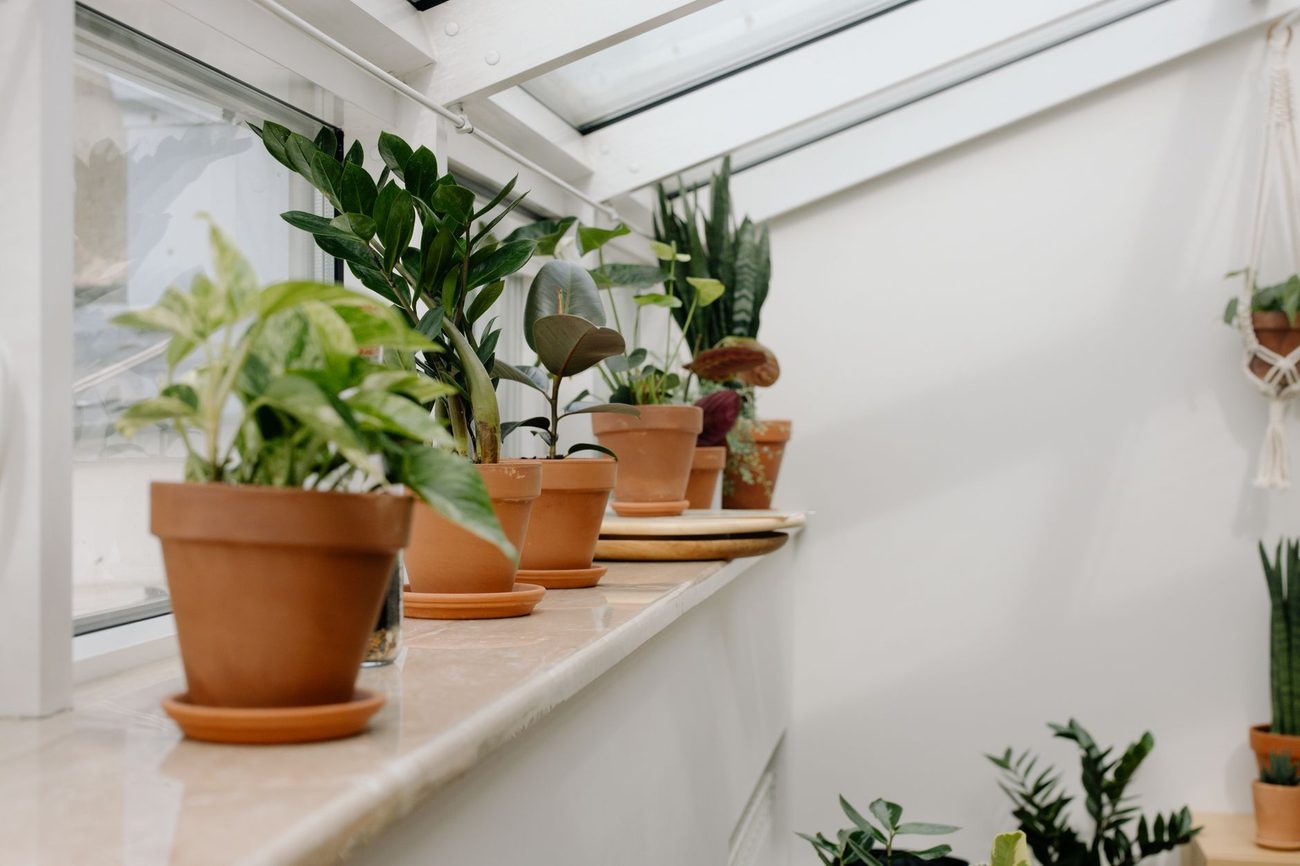
North-facing windows are great for working at a desk without glare and for photos with no harsh shadows. For plants, they're a challenge. The light is indirect and fairly bright right next to the glass, then drops off quickly. A plant six feet from our window is basically in a hallway.
So my first rule became: keep the plants close. Within two or three feet of the window, on the sill or a narrow table right under it. If a plant needs to live across the room, it either needs to be very tough or it needs a grow light.
The plants that have survived
Pothos
The easiest plant I own. A friend gave me a cutting in a jar of water when we moved in, and it now trails off the top of the bookshelf. In low light it grows slower and the leaves stay mostly green rather than variegated, but it keeps going. It also tells you when it's thirsty by drooping a little, then perks back up within an hour of watering.
Snake plant
Ours sits in the corner farthest from the window and still puts out a new leaf every few months. I water it maybe once a month in winter. It is almost impossible to kill by neglect and very easy to kill by overwatering, which is the mistake I almost made.
ZZ plant
Glossy, upright and slow. It's been in the same pot for two years. The only drama was one yellow stem after I watered it too often last summer.
Cast iron plant
The name is accurate. It's in the dim hall, and it simply doesn't care.
Parlor palm
A little fussier about dry air, especially with our baseboard heat running all winter, but it's held on. I keep it on a tray of pebbles with a bit of water underneath, and that seems to help.
What didn't make it
- The fiddle-leaf fig. Needs bright, consistent light. North windows aren't enough.
- Succulents. I tried a tray of them on the sill. They stretched toward the glass, got leggy and pale, and then rotted. They want sun we don't have.
- Basil. Every spring I try. Every spring it dies. Herbs now live on the west-facing balcony from May through September, where they get a few hours of hot afternoon sun.
A few habits that helped
- Water less in winter. Low light means slow growth, which means the soil stays wet longer. I check with a finger about an inch down and only water when it's dry.
- Rotate pots every couple of weeks. Everything leans toward the window. A quarter turn keeps them from growing sideways.
- Wipe the leaves. Dust blocks what little light there is. A damp cloth once a month makes a visible difference on the ZZ and the snake plant.
- Keep them away from the heater. Our baseboard heaters run right under the windows, so in winter I move the more delicate plants up onto a shelf where they're not sitting in a column of hot, dry air.
- Check what's safe for pets. Some common houseplants are toxic to cats. Olive mostly ignores ours, but the pothos lives up high for a reason, and anything she shows real interest in gets moved.
About grow lights
I resisted for a long time because I didn't want the apartment looking like a lab. This winter I finally clipped one small LED grow light to the bookshelf above the parlor palm and set it on a timer for ten hours a day. It's warm-toned, it looks like a reading lamp, and the palm put out two new fronds in February, which it has never done before. For anything that's struggling, a small light like that is probably the cheapest fix.
The light outside is changing quickly now. By the end of the month I'll move a couple of pots out to the balcony for the summer, and I'll try basil one more time, outside, where it actually has a chance.